Can You Sell a House During Probate in Massachusetts?
Yes, you can sell a house during probate in Massachusetts. But there are a number of factors that affect the process, such as whether the estate has already been initiated, whether the property needs to go through formal probate, and whether or not the personal representative is even permitted to sell the home.
In Massachusetts, there are some extra legal procedures, court paperwork, title coordination, and communication between heirs or beneficiaries that may be involved in a probate sale. Some probate home sales go smoothly, but others can be delayed due to family disputes, unclear property ownership, liens, property conditions, or court requirements.
By familiarizing themselves with the probate process before listing the property, executors, heirs, and family members can better navigate the process and make informed decisions about the sale of the property.
What is Probate in Massachusetts?
Probate is the legal procedure that’s followed to resolve a person’s estate upon their passing. Upon the death of a Massachusetts resident who died with real estate assets, it may be necessary to appoint a formal personal representative, also known as an executor in order to manage the estate’s affairs through Probate and Family Court.
This involves a series of steps, which may include:
- identifying heirs and beneficiaries
- paying debts and taxes
- managing estate assets
- distributing property
- potentially selling real estate
Not all Massachusetts property will go through probate. Some homes may be outside probate because they were held in certain trusts or were jointly owned with survivorship rights.
But there are still a lot of inherited houses in Massachusetts that need to be probated before they can be sold.
Can You Sell a House Before Probate Is Completed in Massachusetts?
Sometimes, yes.
In many Massachusetts probate cases, the personal representative is allowed to sell the property prior to the completion of the probate. But the court typically has to first approve the representative to represent the estate.
The exact time frame will vary with:
- whether probate has officially opened
- the type of probate proceeding
- whether there is a valid will
- whether heirs agree
- title conditions
- court processing times
Probably one of the largest misconceptions about probate sales is that families think they can sell the home as soon as someone dies. In fact, sometimes the legal right to transfer ownership takes time to be established.
Who Has the Legal Right to Sell a Probate Property?
The personal representative that the Massachusetts Probate Court appoints generally has the power to handle and possibly sell the property.
Where a proper Will has been made, the Will may specify the executor. Generally, if there is no will, the court will choose an administrator.
Usually, even if there are several heirs, the individual beneficiaries are not allowed to sell the property alone and must have proper legal authority through the estate.
This often becomes confusing for families when:
- siblings disagree about selling
- One heir is occupying the property
- ownership documentation is unclear
- inherited debts exist
- communication breaks down between family members
Probing sales have legal authority and title transfer requirements, and many families work closely with a Massachusetts probate attorney throughout this process.
How Long Does Probate Take in Massachusetts?
A will with no complications and problems can pass through probate relatively quickly, whereas a will that is contested or complicated can take a much longer period of time.
Some of the factors that influence the timeline are:
- disputes between heirs
- missing estate documents
- creditor claims
- tax issues
- title problems
- out-of-state heirs
- property condition concerns
Delayed probate proceedings can cause a delay in home sales in Massachusetts, as would-be buyers may not want to purchase a property if the estate doesn’t have clear authority to pass the property on to the heirs.
That is one reason why probate properties are frequently marketed to investors or money buyers who are more accustomed to the slow-moving calendar and estate issues.
Can You Sell an Inherited House As-Is During Probate?
Yes. Many probate properties in Massachusetts are sold as-is.
Many inherited homes are older buildings, which might include:
- deferred maintenance
- outdated heating systems
- water damage
- clutter
- personal belongings
- long-term vacancy issues
In many cases, heirs would rather sell what they have as it comes, as they don’t want to spend any more money on it before selling.
As-is probate sales are particularly prevalent when:
- heirs live out of state
- The estate lacks repair funds
- multiple beneficiaries are involved
- The property needs major updates
- The family wants a faster sale
Sellers are still, however, subject to the Massachusetts disclosure requirements in the sale of inherited property.
Do All Heirs Need to Agree to Sell the Property?
Not always, but disagreements can certainly complicate the process.
Unanimous heir approval may not always be necessary if the personal representative is legally authorized to sell under the will or under his/her probate appointment. But conflicts between beneficiaries can cause delays or problems.
There are frequent family disagreements regarding:
- disagreements over pricing
- emotional attachment to the property
- disputes about repairs
- accusations of unfair handling
- disagreements about keeping versus selling the home
When there is a lack of communication between family members, the probate process can be complicated.
Probate litigation over inherited real estate can greatly extend the probate process and the time until a house can be sold in Massachusetts.
Should You Make Repairs Before Selling a Probate House?
In many cases, possibly not.
There are several things most probate sellers can do better by concentrating on:
- cleaning the property
- removing personal belongings
- improving basic presentation
- addressing obvious safety concerns
You don’t always need to do big things, particularly if there is enough demand for older homes or fixer-uppers in the local market.
There are many cash home buyers in Massachusetts who look for inherited properties that they can remodel themselves, especially around Greater Boston, where there is not as much inventory.
Initiating large repair work orders during the probate procedure can sometimes generate extra:
- delays
- family disagreements
- financial stress
- contractor coordination problems
Typically, this will depend on the type of home, the market demand, and the estate’s timeline for selling.
How Do You Prepare a Probate House for Sale?
The process of preparing a probate property may differ from that of a traditional owner-occupied property.
Many inherited homes have been furnished over the years, or have papers and belongings scattered throughout, or they have maintenance that has been neglected.
Families are not only coping with emotional pressures, but they are also dealing with the practicalities of cleaning up the property.
Typically, the best way to do this is to work on:
- decluttering
- removing trash and excess furniture
- basic cleaning
- improving lighting
- exterior cleanup
- securing vacant property access
Uninhabited properties in Massachusetts may fall vacant after a death in the household, and it is not uncommon to see those homes fall into disrepair during the winter season when the heating systems are not well-maintained.
Older homes across Worcester County, Hampden County, Middlesex County, and portions of Cape Cod can also experience moisture or freeze issues if the homes are left unoccupied for extended periods of time.
Do Probate Homes Need to Go Through the Multiple Listing Service (MLS)?
Not necessarily.
Some probate homes are traditionally listed through the MLS to expose them to the maximum number of buyers and competition.
Others are not listed and are sold directly to investors or cash buyers.
The optimal choice is frequently dependent upon:
- property condition
- timeline pressure
- family cooperation
- repair needs
- estate expenses
- local buyer demand
Some markets, particularly those for recently updated or move-in-ready homes, can see greater offers with traditional MLS listings.
But distressed probate homes can get even more attention from the cash buyer willing to buy the home as is.
Why Do Probate Sales Sometimes Fall Apart?
Probate transactions are more complicated than home sales.
Some of the problems that slow or derail probate closings are:
- title problems
- unresolved liens
- missing heirs
- probate authority delays
- family disputes
- inspection concerns
- financing delays
- unclear ownership records
Sometimes the Buyer can get nervous when all necessary documentation for Probate is not included, or when communication with the Estate and the Buyer is inconsistent.
This is one of the reasons why a probate seller may find it beneficial to have a knowledgeable expert who has had experience in probate transactions in Massachusetts.
Do You Need a Probate Attorney to Sell a House in Massachusetts?
In most cases, yes.
Although not all cases legally mandate that they have their own probate attorney, there are many families that greatly benefit from having legal counsel present when they are selling a property through an inheritance.
A Massachusetts probate attorney may help:
- open the estate
- obtain court authority
- resolve title issues
- coordinate with heirs
- review contracts
- manage probate filings
- address creditor claims
Since probate real estate sales have both estate law and real estate law components, there is lots of potential for costly errors down the trail that could be averted with experienced legal advice.
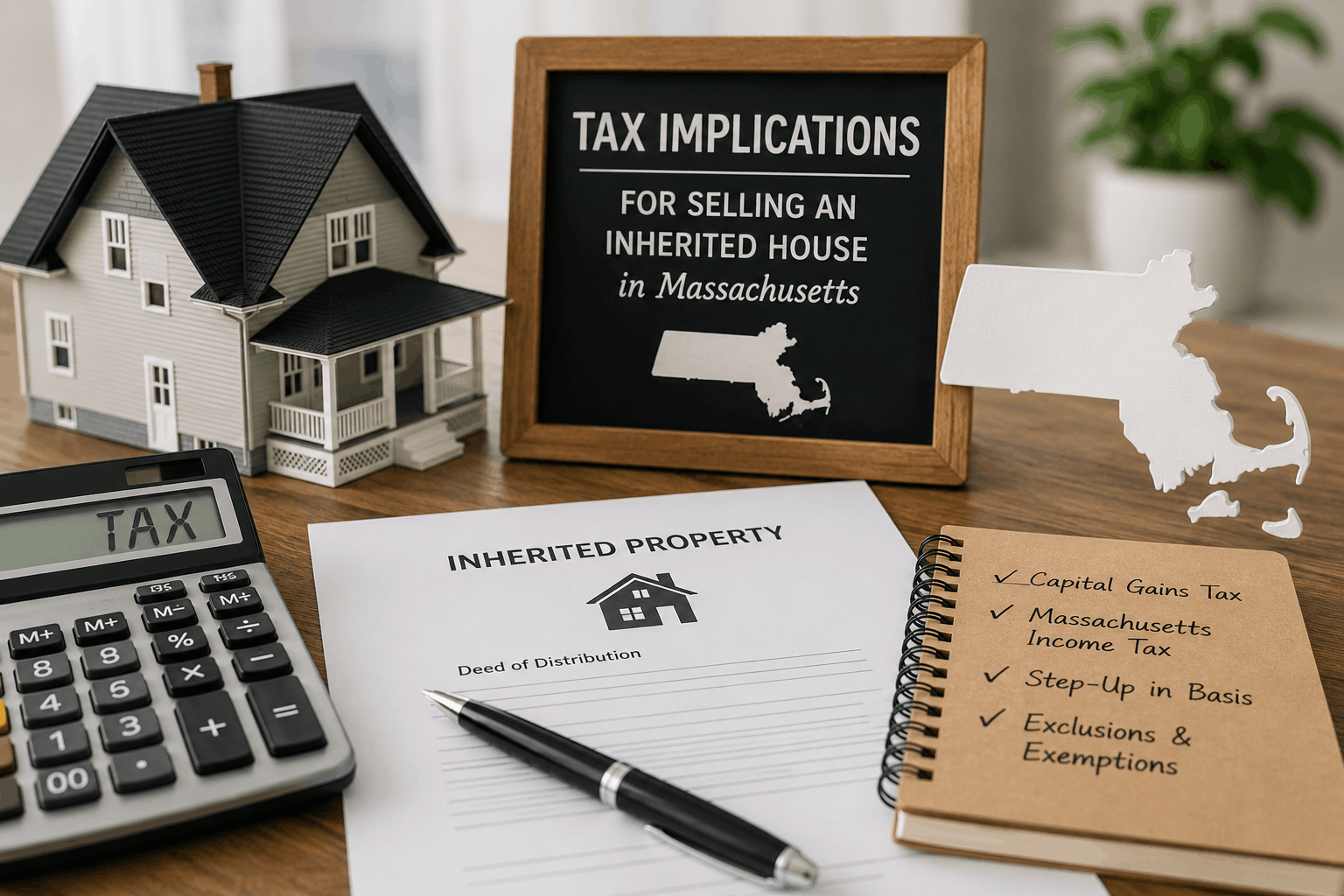
Are There Taxes When Selling an Inherited House in Massachusetts?
Potentially.
The tax implications vary based on various factors such as:
- the property’s inherited value
- final sale price
- capital gains considerations
- estate structure
- federal and Massachusetts tax rules
The tax basis of many properties is “stepped up” because of the fair market value of the property at death, which may lower future capital gains liability.
But each estate is unique, and families should refer to educated legal or tax advisors about what the tax requirements are.
Who Is a Probate Sale Usually Best For?
Probate sales can be most successful with simple, realistic expectations and communication between family members.
In some cases, traditional MLS exposure is beneficial for some estates, especially when the estate’s property is in good shape, and several heirs work well together.
Some situations may call for direct cash sales, particularly when:
- the property needs repairs
- The estate wants a faster closing
- heirs live out of state
- The home contains extensive belongings
- the property has code issues or deferred maintenance
No one strategy of probate is “best” for every Massachusetts family.
The proper answer is typically based on the form of the home, connections and lifestyle amongst the members of the family, the legal calendar, and the financial objectives of the estate.
Final Thoughts on Selling a House During Probate in Massachusetts
Yes, it is definitely possible to sell a house during probate in Massachusetts, but it’s not as simple as a regular real estate sale.
A probate sale requires legal authority, court coordination, title review, family communication, and property management decisions, and these decisions can substantially impact the outcome and time.
There are some probate homes that sell fast, with virtually no issues. Others may have delays due to disagreements, repairs, title problems, or probate filings not being completed.
By familiarizing themselves with the probate process in Massachusetts before listing, families can better prepare themselves and make informed decisions throughout the sale process.
Regardless of whether the estate decides to go with a traditional listing, an as-is sale, or a direct cash buyer, the probate home sale process can be much smoother with careful planning and experienced legal counsel.
Helpful Massachusetts Resources
- How to Sell a House by Owner Massachusetts
- Selling a House in Foreclosure Massachusetts
- Attorney Fees For Home Closings In Massachusetts
- Taxes on Selling a House in Massachusetts
- Selling a House During Probate in Massachusetts
- How to Sell a Hoarder House in Massachusetts
- Tax Implications for Selling an Inherited House in Massachusetts
- How to Sell a Rental Property with Tenants in Massachusetts