

While there may be significant tax implications involved in selling an inherited home in Massachusetts, many heirs don’t realize that the tax obligations associated with selling the house may be less than they feared due to a concept known as a “step-up in basis.”
Massachusetts does not impose its own inheritance tax, which means that inheritors of a home typically are not taxed simply for their inheritance. In certain situations, however, the sale of inherited property may be subject to capital gains taxation, estate tax concerns, probate fees, and other tax and financial issues.
Knowing this about taxes before selling inherited property can help heirs avoid costly errors and make more informed financial decisions.
Do You Pay Taxes When You Inherit a House in Massachusetts?
Usually not immediately.
Massachusetts does not have a traditional inheritance tax on assets you inherit from a deceased family member, such as real estate and money. If you inherit the house directly, it won’t automatically be subject to income taxes for the heir.
Later on, taxes can become an issue however based on:
- when the property is sold
- how much the property appreciates after inheritance
- whether the estate owes Massachusetts estate tax
- whether the property generates rental income
- how long heirs keep the property
This distinction can cause many families to be confused, as inheritance tax and estate tax are not the same.
What Is the “Step-Up in Basis” on an Inherited House?
One of the largest tax benefits of an inherited home is the bump in basis.
Typically, the tax basis of the property when someone dies is the property’s fair market value on the date of death, not on the date it was originally purchased decades ago.
This can significantly decrease any capital gains taxes at the time of sale.
For instance, a Massachusetts house was bought in 1980 for $90,000 by the parents. At the time of death, the house was valued at $700,000.
If the heirs did not benefit from the step-up in basis, they may be responsible for taxes on more than $600,000 worth of appreciation. The stepped-up basis, however, brings the property value closer to market value at inheritance, cutting down the taxable gains to a much smaller amount.
That is one of the many reasons why many inherited property sales result in much less capital gains risk than families would anticipate.
How Are Capital Gains Calculated on an Inherited House?
Capital gains are generally based on the difference between:
- the property’s stepped-up value at inheritance
- the eventual sale price
If the home is sold soon after death for a similar amount to the appraised value, there may not be much taxable capital gain.
But if the property has increased significantly in value since it was inherited, then taxes may apply to the amount of growth since the date of inheritance.
For example:
- inherited value at date of death: $650,000
- eventual sale price: $750,000
- potential taxable gain: approximately $100,000 before adjustments and expenses
Selling expenses like brokerage commissions, legal fees, and some improvements can help further lower taxable profits.
Is There a Time Limit to Avoid Capital Gains Tax?
No.
One of the most common myths about inherited property is that heirs have 6 months or a year to sell the home to avoid taxes. An automatic federal rule for a fast sale does not exist.
The relationship between the following is most important:
- the stepped-up basis
- the future sale price
If the property appreciates in value after inheritance, any future appreciation could be taxable, no matter how soon or slowly the property is sold.
However, many heirs choose to get a professional appraisal shortly after inheriting the home, as it is important to properly document the home’s fair market value for future tax purposes.
Does Massachusetts Have an Estate Tax?
Yes.
While Massachusetts doesn’t have an inheritance tax, it does have an estate tax under certain circumstances.
The estate is subject to estate tax, not the heirs directly.
When the decedent’s overall estate surpasses the required threshold, Massachusetts estate tax concerns may come into play. The estate may include:
- real estate
- bank accounts
- investments
- retirement assets
- business interests
- life insurance in certain situations
If you are the inheritor of a large estate, there may be more documents to file and coordination required before the transfer or sale of the property.
This is one reason probate attorneys and estate professionals are frequently involved in Massachusetts inherited property transactions.
What Happens if Multiple Heirs Inherit the Property?
Multiple-heir scenarios can make tax planning and selling more complex.
Common issues include:
- disagreements about timing
- disputes over repairs
- unequal financial goals
- emotional attachment to the property
- buyout disagreements between siblings
If one heir wishes to retain the property and other heirs wish to sell, more legal and tax planning may be needed.
Some families decide to:
- sell immediately
- keep the home as a rental
- buy out other heirs
- transfer ownership into trusts or LLCs
The tax aspects of each choice may vary depending on the form of ownership.
What If You Move Into the Inherited House?
Some heirs prefer to occupy the inherited property rather than sell it right away.
Later on, if the property becomes the heir’s primary residence, additional tax rules may come into play.
For instance, capital gains exclusions may apply when the home is sold later if the homeowner meets the primary residence ownership and occupancy criteria.
However, the tax situation for inherited houses can become complicated because:
- part of the gain may involve stepped-up basis rules
- part may involve future appreciation
- part may involve primary residence exclusions
Things can get complicated quickly in these situations, particularly when the property is kept for a significant period of time after inheritance.
Are There Taxes if You Rent the Inherited House First?
Potentially, yes.
Some heirs do not sell the inherited property right away. Instead, they rent it out and choose to sell it later.
Renting can create income opportunities, but it can also affect future tax calculations because:
- rental income becomes taxable
- depreciation deductions may apply
- future capital gains calculations become more complex
Depreciation can decrease the adjusted basis of the property, which may lead to a larger taxable gain when the property is eventually sold.
This is why many heirs speak with accountants and estate professionals before turning inherited property into a long-term rental.
Should You Get an Appraisal on an Inherited Property?
Typically, yes. One of the smartest financial moves an heir can make is to get a professional appraisal close at the time of inheritance.
The appraisal is useful for determining:
- fair market value
- stepped-up basis documentation
- future capital gains calculations
- probate reporting support
If there are no valuation records, it can be difficult to determine taxes at a later date.
This is particularly important in Massachusetts housing markets that can change quickly over time, with home values varying widely by location.
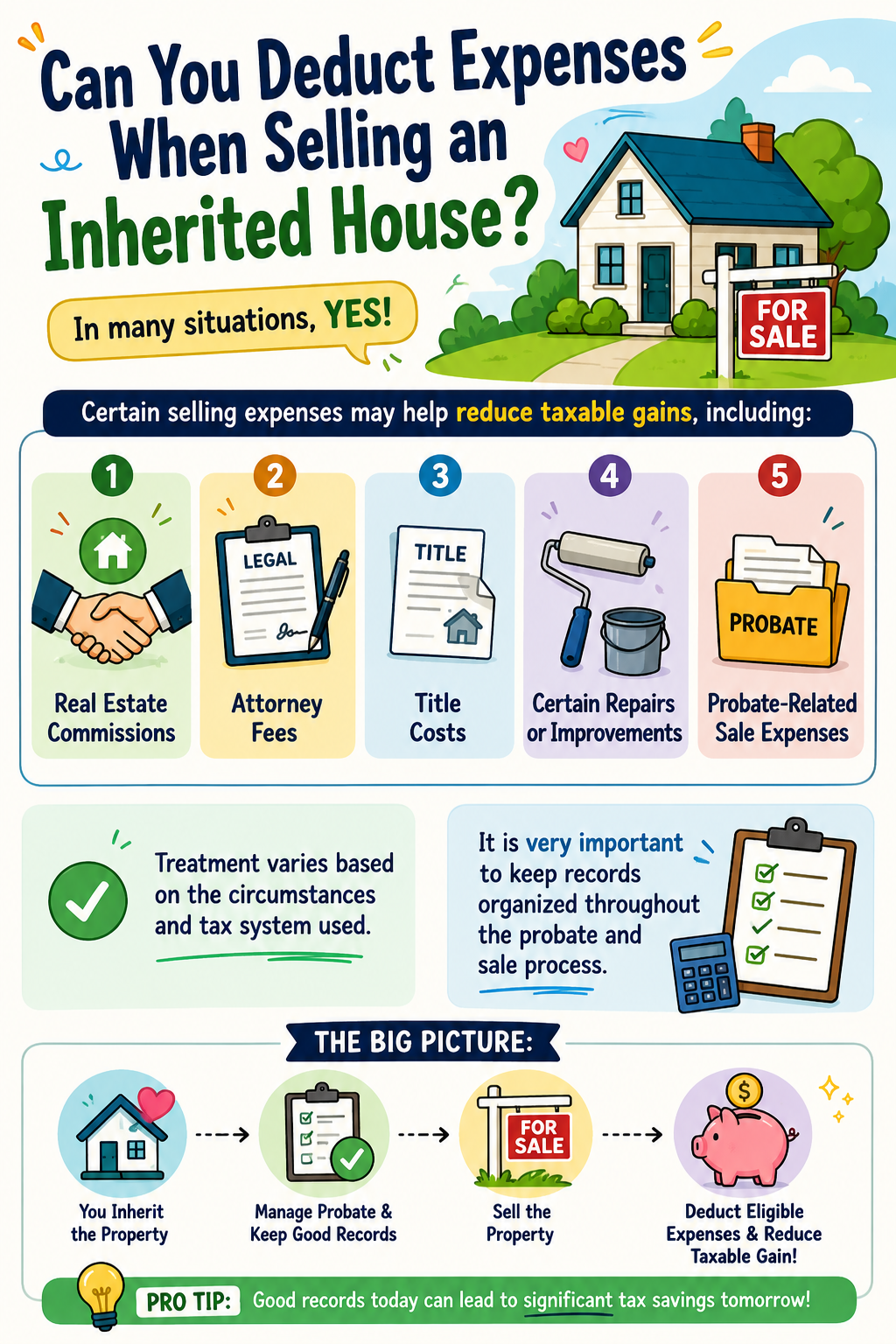
Can You Deduct Expenses When Selling an Inherited House?
In many situations, yes.
Certain selling expenses may help reduce taxable gains, including:
- real estate commissions
- attorney fees
- title costs
- certain repairs or improvements
- probate-related sale expenses
Treatment varies based on the circumstances and tax system used.
It is very important to keep records organized throughout the probate and sale process.
What Happens if the House Sells for Less Than the Inherited Value?
Occasionally, inherited houses drop in value after the owner’s death.
This can happen because of:
- market changes
- deferred maintenance
- property damage
- economic conditions
- neighborhood decline
The stepped-up basis could result in a capital loss rather than a capital gain, depending on the circumstances, if the eventual sale price is less than the stepped-up basis.
These rules can be significant when an inherited property needs substantial work or sits vacant for a long period of time during probate.
Are Probate and Taxes Connected?
Often times, yes.
Probate itself is not necessarily a tax, but the administration of probate often intersects with:
- estate tax filings
- valuation requirements
- title transfers
- creditor claims
- property sale coordination
The Massachusetts probate timeline may also influence the eventual sale of the inherited property and the additional costs that accumulate while the estate is being probated.
This is especially common when:
- multiple heirs are involved
- the home needs repairs
- title issues exist
- family disputes arise
- the estate lacks liquidity
Should You Sell an Inherited House Quickly?
Not always.
Some heirs benefit from selling quickly because:
- carrying costs stop accumulating
- maintenance responsibilities end
- probate can close sooner
- market conditions are favorable
Others may decide to:
- keep the property long term
- convert it into a rental
- sell the inherited property as-is to a cash home buyer in Massachusetts without making any repairs
- renovate before selling
- wait for stronger market conditions
The right decision depends on:
- family goals
- tax planning
- property condition
- local market trends
- emotional considerations
- estate obligations
There is no single “best” strategy for every inherited property situation.
Do You Need a Tax Professional Before Selling?
In many cases, absolutely.
Inherited property sales often involve overlapping issues, including:
- probate
- estate taxes
- capital gains
- stepped-up basis calculations
- trust structures
- rental income
- multiple heirs
Even seemingly simple inherited sales can lead to surprises and additional tax issues when ownership, records, or estate documents are unclear.
Consulting with Massachusetts estate attorneys, accountants, or tax professionals can help families avoid costly mistakes during the selling process.
Final Thoughts on Tax Implications for Selling an Inherited House in Massachusetts
While there are important tax considerations when selling an inherited house in Massachusetts, many heirs find that the financial impact is not as large as it may seem, thanks to stepped-up basis rules.
Although Massachusetts doesn’t have a direct inheritance tax, this type of property sale may raise issues involving capital gains, estate tax, probate coordination, and long-term financial planning.
Some of the most important factors that affect the tax outcome include:
- the property’s value at inheritance
- future appreciation
- timing of the sale
- whether the property becomes a rental
- how the estate is structured
Each family’s inherited property scenario is unique, so major decisions regarding inherited real estate should be carefully considered from legal, tax, and financial perspectives.
Helpful Massachusetts Resources
- How to Sell a House by Owner Massachusetts
- Selling a House in Foreclosure Massachusetts
- Attorney Fees For Home Closings In Massachusetts
- Taxes on Selling a House in Massachusetts
- Selling a House During Probate in Massachusetts
- How to Sell a Hoarder House in Massachusetts
- Tax Implications for Selling an Inherited House in Massachusetts
- How to Sell a Rental Property with Tenants in Massachusetts